To further develop an understanding for what computation fabrication means and how it is used in day to day life. Examples of computational designs will be observed and commpented upon. There are three main sections to this post: naturally occuring computational design, human made computation designs, and some of the people within the computational fabrication space. Naturally occuring computational design is using examples of patterns and underlining design structures that life in nature is doing on its won. Human made computation designs is to demonstrate some interesting methods of production or design that people are. dooing that involve computational design. Displaying some of the people currently doing computational fabrication is to showcase the recent breakthroughs and methodologies people are using it for in the field.
As always, links to where I got any of the information will be provided in hyperlinks on the images associated.
Examples of Computational Design in Nature
Botanical Designs: Bamboo
Bamboo is a highly versatile grass; the multiple variety’s of it allow for uses from lumbering to decorative placements. Bamboo acts as a colony plant, having most of its mass and energy stored in its roots where new shoots can grow from in the Spring. Bamboo shots only grow for a relatively short period, and then remain at the same size. Bamboo use their fast growth to try and break above the treeline to get the most sun and send the energy back to the root system below.


Zoological Designs: Snake Scales
The scales of snakes fold over one another to create a cascading effect that continues throughout their body. The scales coloration can occur in a repeating pattern that can be repeated even after the snake sheds to grow larger.

Environment Built by Organisms: Hard Corals
Corals are a colony of “polyps” that build a solid housing structure to protect from the elements of the ocean. The sturdy nature of coral is what gives the multiple coral reefs around the world the structure and security to allow for diverse life to flourish there. New corals build upon where the old corals began, thus constantly growing the reef in size.

Examples of Human Built Computation Design
3D Printing Metal Parts
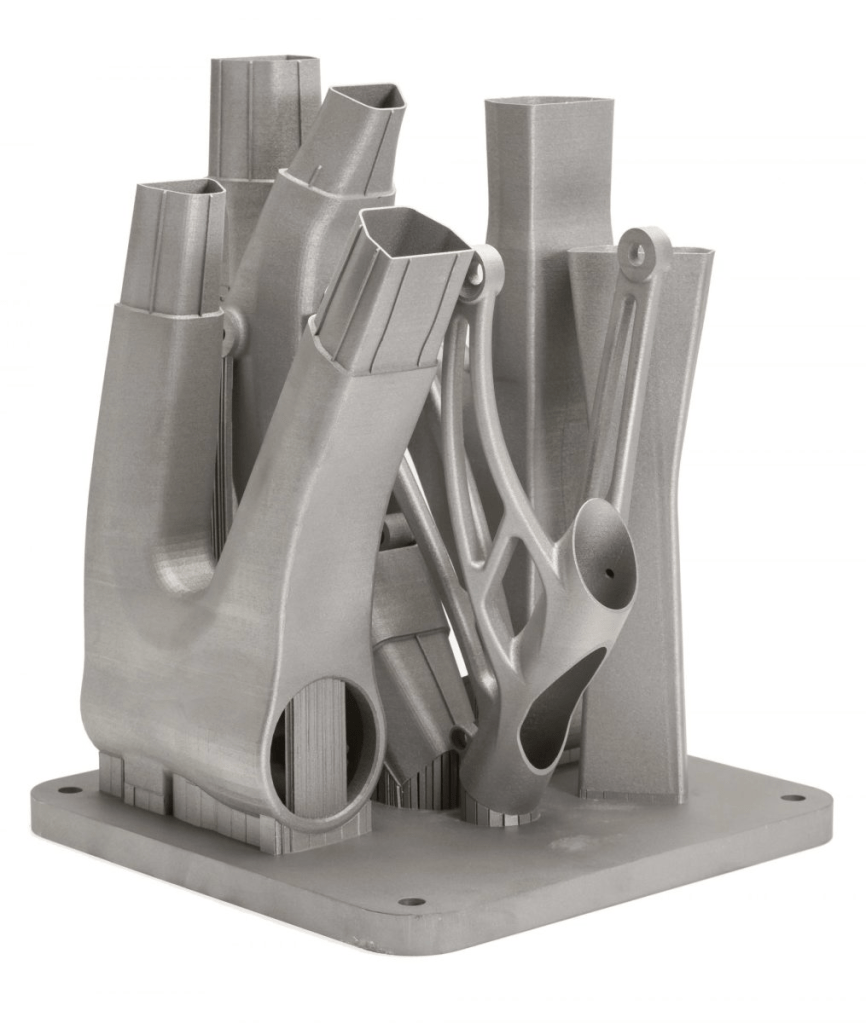
Through the use of fine metal powders, a laser and a wiping arm, and a detailed slicing software; amazing geometries without supports can be created out of solid metals. The basic premise is simple; A slicer creates thin stacks of the shape of the object, then the printer creates a thin layer of metal powder is wiped across the work surface and then select areas are melted by a laser to stick to nearby metal. The main downside to this methodology is that all the surrounding metal dust must be removed before the part can be seen or used.
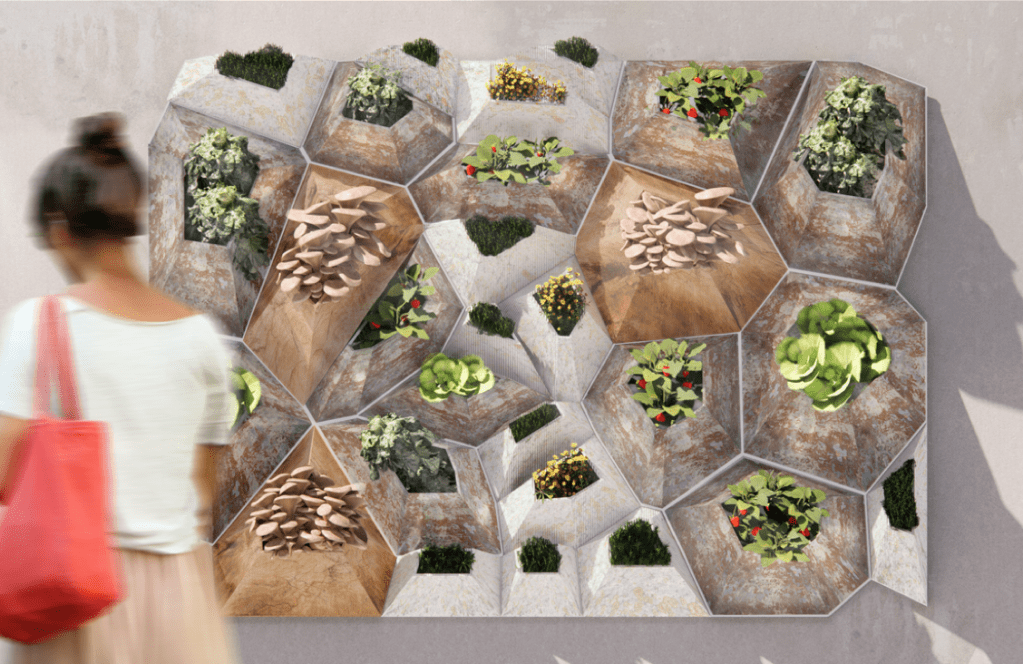
Optimizing Planting Space In Urban Environments
Through the use of fabrication techniques, a dense small scale “micro-urban” garden can be created to allow for a variety of plants to grow without sacrificing much space.
Creating Lamps Through Additive Manufacturing
The creation of unique lampshades, some of which can only be created through additive manufacturing methods. With additive manufacturing there is no need for key molds of each lamp design saving on material cost and storage.
Some People from the Computation Fabrication Space
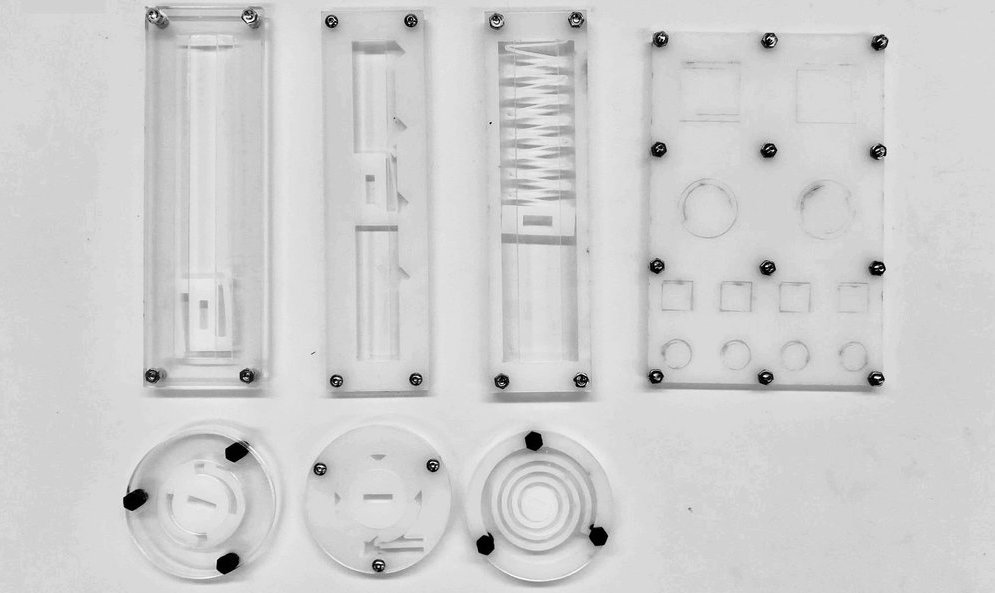
Hongnan Lin
The creation of custom haptic devices through CAD and CAM software allows for greater user customization with products. The streamlined process created by the Flexhaptics workflow allows users unfamiliar with the mathematics to be able to customize with haptics. I quite enjoy the process of customization and accessibility, I believe people should have access to the things they buy in a way that allows them to tinker and improve them.
Jiahao Li
Through the use of 3D printed device apparatus, a robotic arm is able to assist a person with everyday household tasks that normally require the high degree of dexterity only human hands can still currently do. Through the interactions with these apparatuses a robotic arm is able to interact with multiple objects requiring a high dexterity.
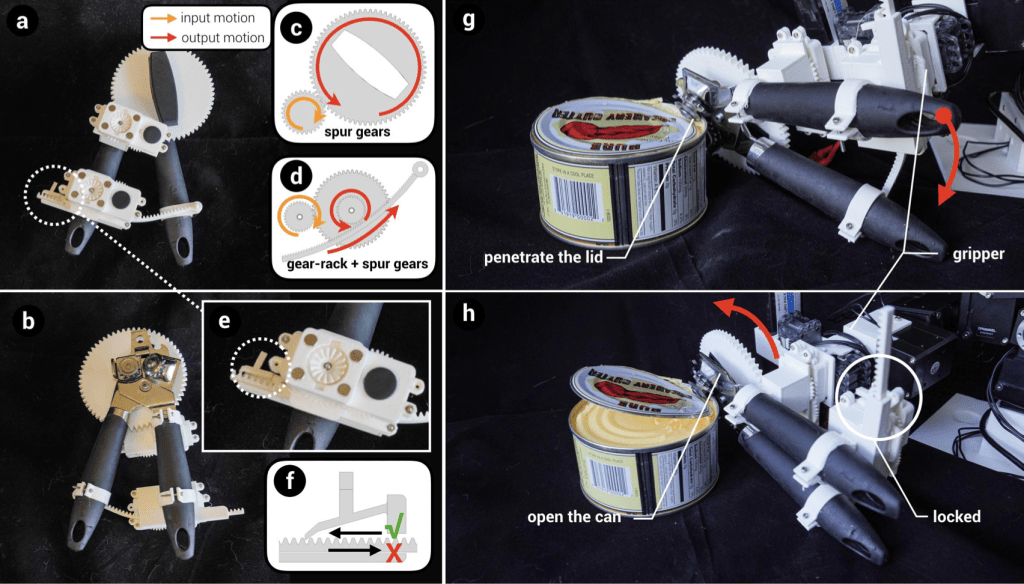
This system uses an interchangeable 3D printed mount that articulates through a crown gear system, allowing the robotic arm to always be able to drive the device, but the adaptive hand can be driven in multiple different ways. This easily changeable concept would allow for those with dexterity issues to be able to live more comfortably when trying to do everyday tasks.
Conclusion
A better understanding of what one wishes to study helps with both planning future projects and creating an appreciation for the progress that has been made so far. From the systems in nature demanding an approach of underlying computation, to cutting edge applications of the approach to allowing for more human control of mechanical devices. Many of the entries mixed both form and function into what was presented, I hope to be able to do the same with my projects in the future.
 Quincy's Projects
Leave a comment